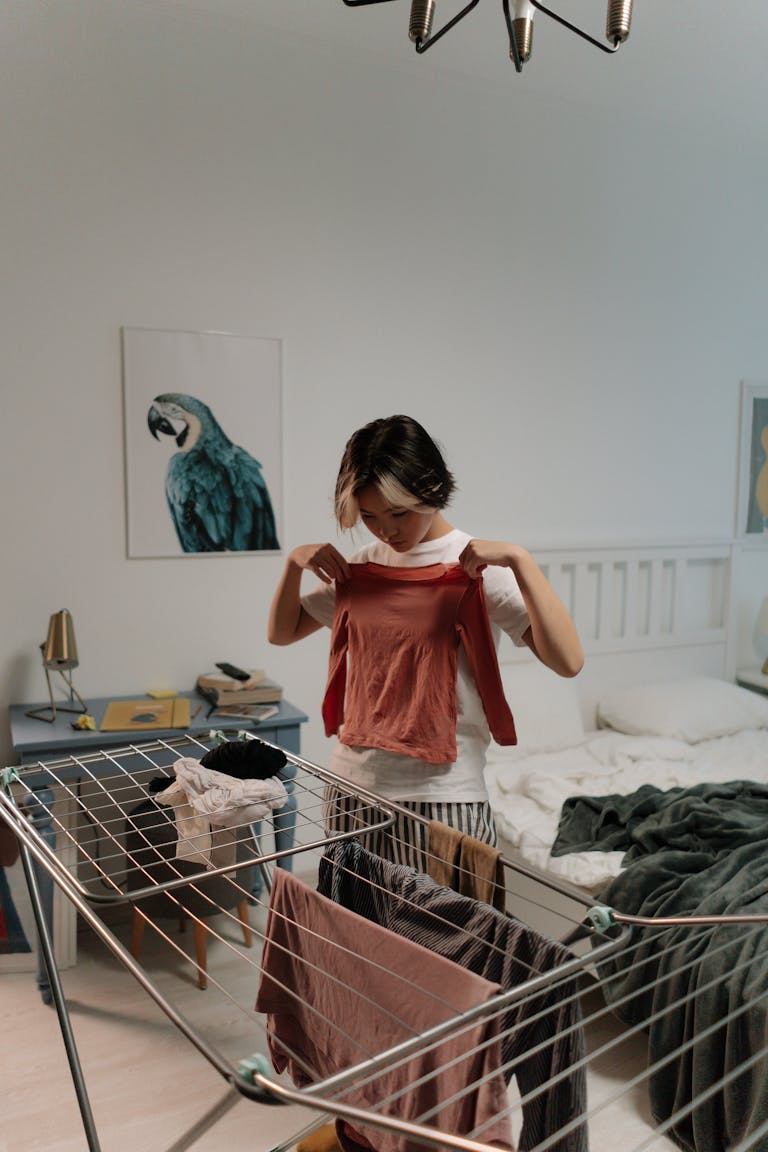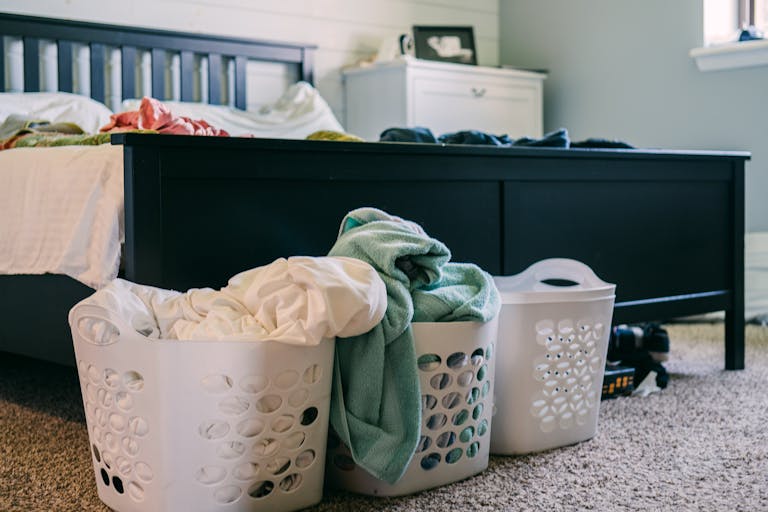
Clothes piled on chairs, papers stacked on desks, random items scattered everywhere.
It’s enough to make anyone freeze in frustration.
You might even feel guilty for letting it get this way, or anxious because you can’t find what you need when you need it.
But here’s the truth: decluttering doesn’t have to take all weekend, a whole day, or endless mental energy.
With a few focused strategies, you can turn a chaotic room into a calm, organized space in just one afternoon.
This isn’t about perfection.
It’s about reclaiming your space, your focus, and your sense of calm.
Trick 1: Set a Timer and Commit
The first step in any successful declutter session is giving yourself a clear time boundary. Decide that you’ll work for a dedicated block of time. Two to three hours in one afternoon, or multiple shorter 30–45 minute sprints if that feels more manageable. Setting a timer does two things:
- It gives you a firm deadline, which helps focus your energy.
- It prevents the perfectionist trap, where you overthink every single item.
Think of it like this: instead of staring at a messy room and feeling overwhelmed, you’re creating a game plan with a finish line. You’ll be amazed at how much you can accomplish when you know exactly how long you have to work.
For example, Sarah, a busy freelance writer, struggled with her home office for months. On a Saturday, she decided to block three hours, with her favorite playlist on, and committed to working straight through. By the end of the session, her office desk was completely cleared, and she felt energized rather than exhausted. That afternoon, a room that had caused her anxiety for weeks suddenly felt like a sanctuary.
Trick 2: Gather Your Bags Before You Start
Before touching a single item, grab three bags or boxes labeled clearly:
- Keep: Things you use regularly and love.
- Donate/Sell: Items in good condition that no longer serve you.
- Discard: Broken, worn-out, or unusable items.
Having these ready prevents indecision and keeps you moving quickly. Instead of pausing to wonder “What should I do with this?” you can act immediately. Each item goes straight into its proper bag, which gives instant visual progress and prevents clutter from creeping back in during the session.
For instance, when Mia tackled her bedroom, she spent 20 minutes preparing her “keep,” “donate,” and “discard” zones. The rest of the afternoon flew by because she wasn’t stopping to make endless decisions—she simply sorted as she went. By the time her timer went off, she had three neat bags ready to leave her home and a bedroom that felt drastically lighter.
Trick 3: Work in Zones
Decluttering an entire room at once can feel impossible, so break the space into smaller zones. Focus on one corner, one surface, or one category at a time. This approach creates visible wins and keeps motivation high.
- Start with a desk or workspace. Clear papers, organize pens, and store loose items.
- Move to clothing or closets. Focus on a single shelf or drawer instead of the whole wardrobe.
- Tackle small surfaces like nightstands, shelves, or coffee tables.
Mini-wins matter. When you see a clear desk or a neatly folded shelf, it gives a psychological boost that makes tackling the next area feel easier. It’s also easier to sustain focus when your brain isn’t overwhelmed by the entire room at once.
Take Alex’s experience as an example. He had a cluttered living room with books, gadgets, and random papers everywhere. Instead of attacking it all, he focused on just his bookshelf first. Within 30 minutes, the shelf was completely organized, which gave him the confidence to move on to his side tables and eventually the whole living room. By breaking it into zones, he avoided burnout and ended the afternoon with a fully decluttered space.
Trick 4: Use the Quick Decision Rule
The most common stumbling block during decluttering is overthinking. When you pick up an item, ask yourself three simple questions:
- Do I use this regularly?
- Does this item make me feel happy, confident, or functional?
- Would I buy it again today if I saw it in a store?
If the answer is no, place it in the donate or discard bag. This quick decision rule keeps you moving and prevents emotional stalling. The key here is speed and decisiveness. You’re not aiming for perfection—you’re aiming for visible, meaningful progress in a short amount of time.
For example, Emily spent hours staring at a box of old notebooks before learning this rule. Once she asked herself the quick questions, she realized she had 15 notebooks she would never use again, which went straight into her discard pile. What used to take hours of emotional labor was suddenly accomplished in minutes.
Trick 5: Finish with a Surface Sweep
After sorting and deciding, the final step is a surface sweep. Walk around the room and focus on small adjustments that make a big difference:
- Clear nightstands, dressers, and counters.
- Arrange books, papers, or decorative items neatly.
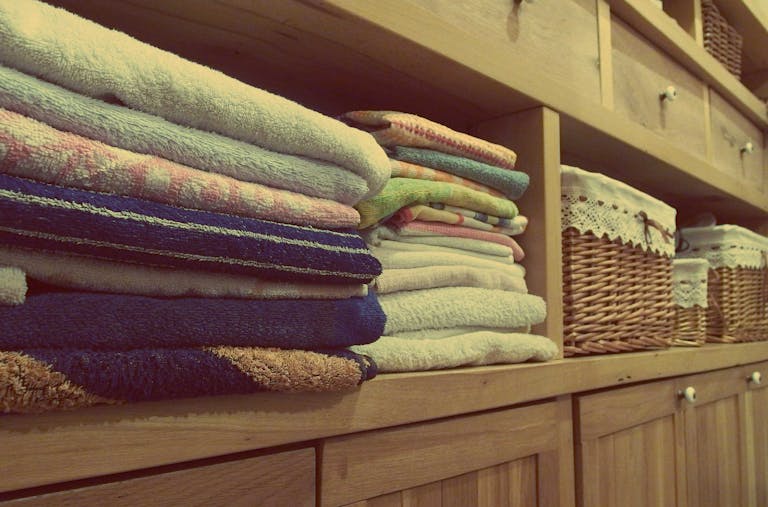
- Fold or hang clothing, and make sure every item has a home.
Even minor adjustments instantly create a feeling of calm. A folded pile of clothes or a neatly stacked set of papers can make a room feel organized and inviting—even if there are still a few boxes to donate or discard.
Adding this finishing touch gives you a sense of closure for the session, making the room feel “done” and the effort worthwhile.
Bonus Tips to Make It Easier
- Play music or a podcast: Keeps energy up and makes decluttering feel less like a chore.
- Reward yourself: A cup of tea, a short walk, or sitting quietly in your decluttered room reinforces the habit.
- Be compassionate: Some items are hard to let go of. Acknowledge your feelings but stay committed to your goal.
- Don’t aim for perfection: You’re creating functional, calm spaces, not a showroom.
Why an Afternoon Can Make a Big Difference
Even a single afternoon of focused decluttering can change the way you feel about a room and your home. A clean, organized space reduces stress, increases mental clarity, and even improves productivity. When your environment feels calm, it’s easier to relax, focus, and enjoy your space instead of feeling weighed down by clutter.
The best part? Momentum carries forward. Once you see the difference a few hours can make, you’re more likely to keep other areas tidy, maintain your decluttered room, and feel motivated to tackle additional spaces in your home.
Takeaway
Decluttering a room in one afternoon is possible, even if the space feels impossible right now. By setting a timer, preparing your bags, working in zones, making quick decisions, and finishing with a surface sweep, you can transform a chaotic room into a calm, organized space. It’s not about perfection—it’s about creating visible, meaningful progress that frees your mind and energy. Each small victory is a step toward a more intentional, peaceful home, and a reminder that even a few focused hours can create big change.